

Is Your All-Wheel Drive Actually Ready For Ohio's Infamous "Mud Season"?


Ohio’s mud season can leave your car struggling to handle slippery roads. AWD vehicles are made for tough conditions, but they need proper care to deliver their best performance.
This blog will guide you on the AWD Maintenance Ohio drivers need for a smooth and safe ride during this messy season. Keep reading to make sure your vehicle is ready!
Key Takeaways
Ohio’s mud season brings slippery roads from melting snow and heavy rain. AWD systems boost traction and stability in these tough conditions.
Regular AWD maintenance is crucial. Check for leaks, uneven tire wear, unusual noises, or dashboard warnings to keep your system ready.
Change differential and transfer case fluids every 30,000 to 60,000 miles to prevent failures during muddy seasons. Use certified technicians for the best care.
Uneven tires or low pressure harm your AWD performance. Replace all four tires together if needed. Inspect often to ensure proper grip on wet surfaces.
Tom Tepe Autocenter offers trusted AWD vehicles like Subaru Foresters and Chevy Silverados designed for rough terrain in Ohio's mud season.

Understanding Ohio's "Mud Season"
Ohio's "Mud Season" brings wet, messy roads that test vehicles. AWD cars handle these tough conditions better than most.
What makes "Mud Season" challenging for vehicles?
Melting snow and heavy rain create thick mud on roads. This mud clogs tires and reduces traction, making it hard to drive. Vehicles struggle with slippery surfaces, especially without all-wheel drive or good tire tread.
Mud and moisture damage drivetrain parts like differentials, transfer cases, and U-joints. Tires wear faster from constant contact with wet dirt. Frequent inspections become crucial as seals, brakes, and undercarriages face extra stress during mud season. A well-maintained AWD system handles these tough conditions better.
Next: Why All-Wheel Drive (AWD) is essential for this season

Why All-Wheel Drive (AWD) is essential for this season
Thick mud can make roads slippery and hard to drive on. All-Wheel Drive (AWD) boosts traction, keeping your vehicle steady on tricky surfaces. This feature helps prevent wheels from slipping in muddy or wet conditions common during Ohio's "Mud Season." It also improves stability while driving through deep ruts or soft ground.
Vehicles like the Subaru Forester with 8.7 inches of clearance or Jeep Grand Cherokee with 10.9 inches are great options for such terrain. AWD systems work best when maintained well, ensuring all four tires grip evenly as needed.
Investing in an AWD vehicle means safer driving, especially during unpredictable Midwest weather near Cincinnati and Indianapolis.

Is Your AWD System Ready for Mud Season?
Your AWD system needs to be in top shape for Ohio's muddy roads. Small issues now can turn into big problems during the season.
Key signs your AWD system needs maintenance
Unusual noises like clicking or clunking from the drivetrain can signal AWD trouble. Vibrations in the driveshaft often mean it needs inspection. Leaks under your vehicle, especially near AWD components, may point to problems with seals or cracked hoses.
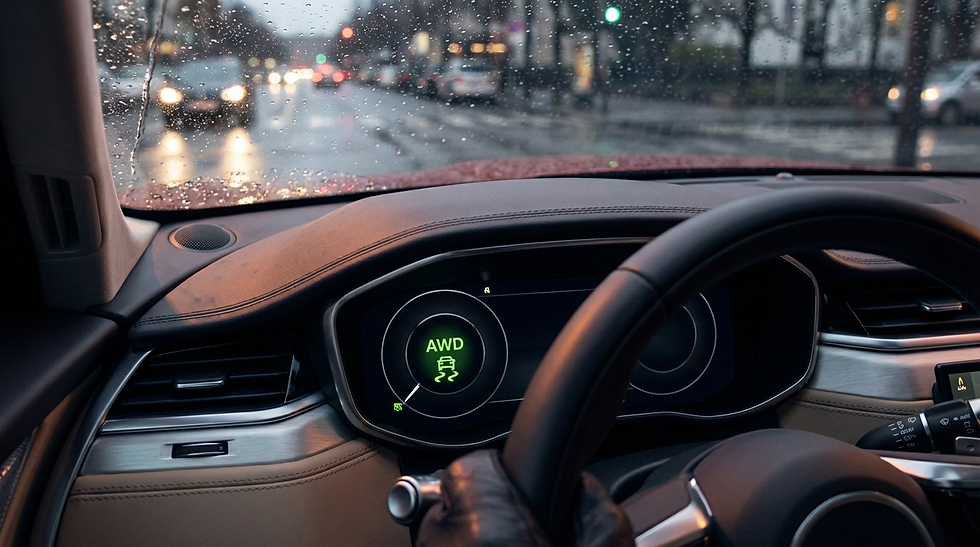
Dashboard warning lights for traction control or AWD systems shouldn't be ignored. Uneven tire wear might indicate a misalignment within your system. Difficulty shifting between drive modes could reveal issues too.
Next, learn how to maintain your AWD system for peak performance during Ohio's mud season.
Common issues AWD systems face in muddy conditions
Mud can clog sensors in AWD systems, leading to poor performance. Water and mud exposure often damage CV axles, boots, and U-joints. Drivetrain components may corrode faster due to constant moisture contact.
Muddy environments can contaminate differential and transfer case fluids. This affects the system's performance over time. Seals and gaskets fail more often during this season, causing fluid leaks that harm the drivetrain further.
Frequent maintenance is key to keeping your AWD running smoothly through Ohio's mud season, says Harry Tepe of Tom Tepe Autocenter.
Proper care helps avoid issues like overheating or mechanical binding caused by mismatched tires. Next, focus on essential maintenance tips for staying ahead of these problems!
Essential Maintenance Tips for AWD Vehicles
Keep your AWD system in top shape to handle slippery, muddy roads. Regular care ensures better performance and avoids costly breakdowns.
Regular fluid changes for differentials and transfer cases
Differential and transfer case fluids should be changed every 30,000 to 60,000 miles. This routine maintenance helps prevent system failures in all-wheel-drive vehicles. Neglecting these services can lead to costly repairs like replacing gears or the power transmission.
Factory-certified technicians use advanced tools to ensure high-quality fluid changes. They also apply gear oil that meets or exceeds OEM standards for better reliability. Modern AWD systems may require software updates during this service, which ensures peak performance during tough conditions like Ohio's mud season.
Inspecting tires for even wear and proper pressure
Check all tires for uneven wear or low tread depth. Uneven tire wear might mean alignment problems or AWD system issues needing attention. Low tread can increase the risk of slipping in mud season, especially during off-roading.
Keep tire pressure consistent and at recommended levels to prevent AWD damage. Low pressure impacts stability control and reduces traction in muddy conditions. Replace all four tires together on your AWD vehicle if needed, as mismatched sizes strain the drivetrain components like CV joints and drive shafts.
Inspecting your tires leads directly to checking for leaks and unusual noises in the drivetrain system next.
Checking for leaks and unusual noises in the drivetrain
Leaks in the drivetrain can signal trouble. Look for fluid pools under your vehicle, especially around differentials, transfer cases, or rear axles. Mud and water from off-road driving may damage CV boots, leading to costly repairs if not fixed quickly.
Unusual noises like clunking or whining could mean worn components. Inspect the drivetrain regularly during mud season to catch problems early. Annual checks by automotive technicians help spot hidden issues like leakage or damaged sensors before they worsen.

Benefits of Proper AWD Maintenance
Caring for your AWD system keeps it running strong during muddy conditions. It boosts performance and helps avoid expensive repairs.
Preventing costly repairs
Skipping AWD maintenance can lead to expensive breakdowns. Ignoring a $30 fan belt could cost over $2,500 if it fails. Neglected issues increase the risk of drivetrain damage and tire failure during muddy conditions.
Routine checks save money by avoiding major problems. A quick inspection for leaks or noises stops small issues from growing into costly repairs. Proper care keeps your vehicle reliable when Ohio’s mud season hits hard.
Improved performance in challenging weather
Proper AWD maintenance ensures your vehicle handles muddy conditions with ease. Regular fluid changes in the differentials and transfer cases help keep the system running smoothly.
Even tire wear and correct pressure improve traction on slippery surfaces.
A well-maintained AWD system boosts control during heavy rain or mud season driving. Inspecting for leaks, worn-out parts, or unusual noises prevents performance issues. These small steps can make tough weather safer and stress-free.
Increased safety and reliability
Routine AWD maintenance ensures safer driving in Ohio's muddy conditions. Worn tires or uneven wear reduce traction, which is vital on slippery roads. Checking tire pressure and alignment helps with stability and control.
Faulty differential fluid levels can cause poor performance in tough terrain. Addressing leaks or drivetrain issues early prevents breakdowns during critical times. A well-maintained all-wheel-drive system handles mud season challenges better than worn systems.
Continue by exploring essential tips to keep your AWD vehicle ready for Ohio's unpredictable weather conditions.
Explore Tom Tepe Autocenter and Car Country’s AWD Vehicle Selection
Discover reliable AWD vehicles built for challenging conditions at Tom Tepe Autocenter and Car Country.
Wide selection of AWD vehicles designed for tough conditions
Tom Tepe Autocenter and Car Country offer over 200 used options, including AWD SUVs, trucks, and four-wheel-drive vehicles. New Chevy models like the Silverado 1500, Equinox, Trailblazer, Traverse, and Trax are excellent for muddy roads in Ohio.
Popular choices such as the Subaru Forester or Jeep Grand Cherokee handle tough terrain well. Customers can shop for affordable vehicles at locations in Indiana or Ohio. Financing is available online to help buyers drive away with confidence.
FAQs
1. How do I know if my AWD vehicle is ready for Ohio’s mud season?
A good way to tell is by checking for a few warning signs before the worst road conditions hit. If your AWD vehicle has uneven tire wear, low tire pressure, unusual drivetrain noises, fluid leaks, or dashboard warning lights, it may need attention before mud season gets more serious. At Tom Tepe Autocenter & Car Country, our team can help inspect key AWD components so you can drive with more confidence on wet, messy Ohio roads.
2. What maintenance matters most for an AWD vehicle during mud season?
The most important services usually include checking tire condition and pressure, inspecting the drivetrain for leaks, and making sure the differential and transfer case fluids are in good shape. These parts play a major role in how your AWD system handles slippery surfaces. Keeping up with routine maintenance at Tom Tepe Autocenter & Car Country can help your vehicle perform better when road conditions turn muddy and unpredictable.
3. Can mismatched tires cause problems for an AWD system?
Yes, they can. AWD systems depend on all four tires working together properly. If one or more tires are significantly different in size, tread depth, or wear, it can place extra stress on the drivetrain and lead to premature wear or costly repairs. That is why Tom Tepe Autocenter & Car Country recommends keeping a close eye on tire condition and replacing tires correctly when needed.
4. Why is AWD maintenance so important before spring driving in Ohio?
Ohio’s spring weather often creates a mix of rain, mud, potholes, and uneven road surfaces that can push your vehicle harder than normal. If your AWD system is not maintained properly, you may notice reduced traction, poor handling, or increased wear on important components. Regular inspections and preventative maintenance can help keep your vehicle safer, more reliable, and more capable when mud season arrives.
5. Can Tom Tepe Autocenter & Car Country help me find an AWD vehicle for Ohio driving?
Yes. Tom Tepe Autocenter & Car Country offers a wide selection of vehicles that can be a great fit for drivers dealing with Ohio and Indiana road conditions, including AWD SUVs and capable trucks. If you need a vehicle that can handle muddy back roads, wet highways, or unpredictable Midwest weather, our team can help you explore options that fit your needs and budget.
Harry Tepe, Owner and Dealer Principal, Tom Tepe Autocenter
Harry Tepe is a seasoned automotive expert and the owner of Tom Tepe Autocenter, a leading vehicle dealership serving the Midwest states of Ohio, Indiana, and Kentucky. With a lifelong passion for automobiles.
Over the years, Harry worked his way up through various roles, absorbing valuable insights into sales management and dealership operations until he became the youngest GM Dealer Principal and owner of Tom Tepe Autocenter, expanding the business to include multiple locations and a standalone reconditioning center.
Under Harry's leadership, Tom Tepe Autocenter and Car Country in Aurora and Harrison, Ohio, have grown exponentially, selling over 2000 vehicles annually and generating over $50 million in revenue. His active involvement in the industry is further evidenced by his participation in the NADA 20 Group and his influential role on the Board of Directors for the Indiana Auto Dealers Association, even serving as its President in 2016.
Harry's journey embodies the essence of expertise, authority, and trustworthiness. His insights and experiences are not just stories of personal growth and business success; they are testaments to his deep understanding of and commitment to the automotive industry.


Comments